How to Store Hermes Silk Scarves: 4 Methods That Work
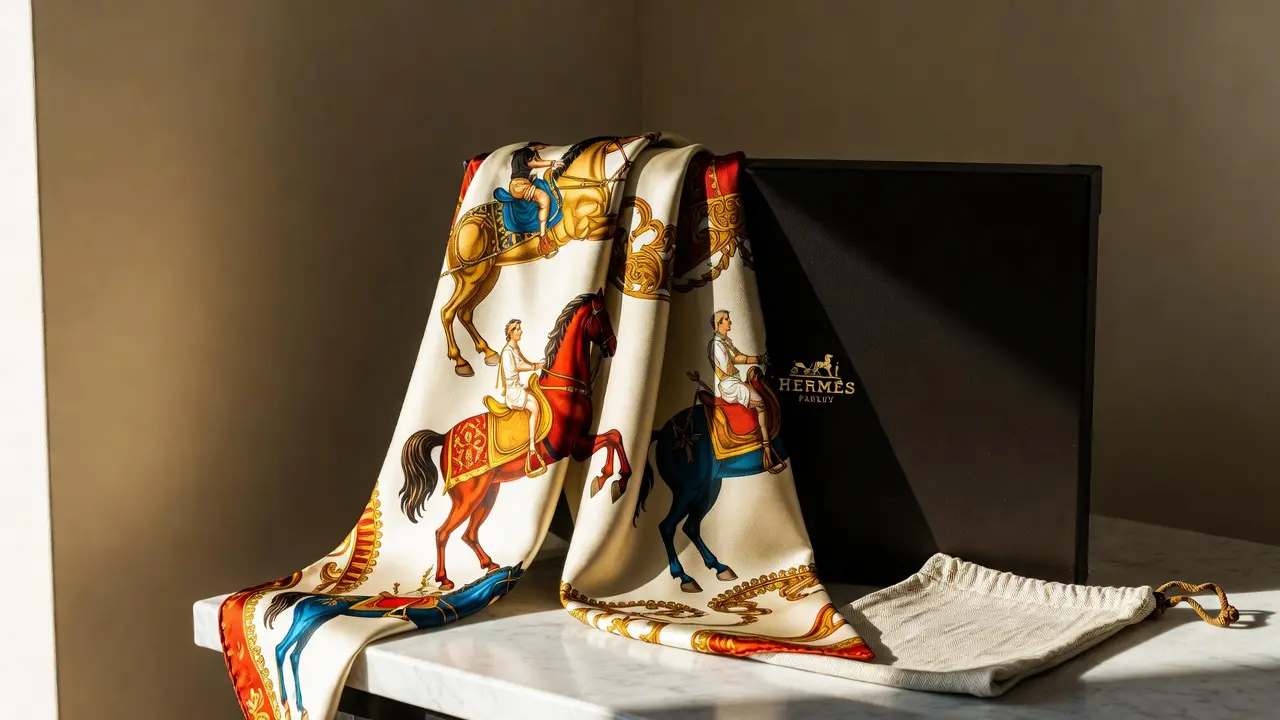
How you store Hermes silk scarves determines whether they stay flawless for decades or develop permanent creases within a single season.
The damage is not always visible immediately. Silk fiber has memory -- tight folds repeated along the same lines gradually weaken the weave at those pressure points until the crease becomes structural, not just cosmetic. At that stage, no amount of steaming fully recovers it.
This guide covers the 4 storage methods that actually prevent creases, matched to your specific scarf format -- 90cm Carre, Twilly, GM shawl, or pleated silk. You will also find a size-specific guide, a travel storage section, the 6 mistakes that cause permanent damage, and a product table covering everything worth buying.
Table of Contents
- Why Hermes Silk Scarves Crease Permanently in Storage
- The 4 Storage Methods That Prevent Permanent Creases
- Storage by Hermes Scarf Format: What Changes for Each Size
- The Right Environment: Temperature, Humidity, and Light
- How to Store Hermes Scarves When Traveling
- Option 1: Cotton or Linen Scarf Pochette
- Products Worth Using -- and One Almost Everyone Gets Wrong
- 6 Storage Mistakes That Cause Permanent Damage
- Frequently Asked Questions
- How do I remove creases from a Hermes silk scarf?
ℹ️ Worth knowing before you start: Hermes silk is remarkably resilient for day-to-day wear. Fold creases from wearing typically release overnight when the scarf is laid flat. The creases that become permanent are almost always from storage, not from wearing and knotting. This guide focuses entirely on storage. |
Understanding why creases become permanent makes the storage rules easier to follow. Silk is a protein fiber. When you fold a silk scarf tightly and leave it under weight in a dry environment, the moisture in the fibers slowly evaporates and the fiber bonds lock into the folded position.
The key factor is time + pressure + dryness. A fold that sits for one week in a humid room is usually recoverable with light steaming. The same fold held for three months under other scarves in a centrally-heated apartment -- where humidity drops to 30-35% in winter -- can become permanent.
Two additional storage risks beyond creasing:
Yellowing from oxidation: Residual skin oils, perfume, and sunscreen left on the scarf undergo a chemical reaction over time. In storage, this accelerates. The yellowing it produces is chemically bonded to the fiber and cannot be cleaned out.
Color fading from UV: Hermes uses vegetable-based dyes on most Carres. These dyes are vibrant but not UV-stable. Even indirect light through a window, accumulated over months, will fade the print on an unprotected scarf.
Both risks are eliminated by the same storage approach that prevents creases: dark, breathable, acid-free storage at stable humidity.
The 4 Storage Methods That Prevent Permanent Creases
Not all methods work equally for all scarf formats. Use this comparison table to choose, then follow the step-by-step for your method below:
Method | Crease Risk | Best For | Silk Safety | Verdict |
Archival flat box + acid-free tissue | Very low | Rare/vintage Carres | Excellent | ★★★★★ Gold standard for long-term storage |
Rolling on pH-neutral tube | None | Daily-rotation scarves | Excellent | ★★★★★ Best for preventing creases entirely |
Original orange box + tissue liner | Low | Occasional-wear pieces | Very good | ★★★★☆ Good if lined correctly |
Shallow drawer, flat with tissue | Medium | Frequently worn scarves | Good | ★★★☆☆ Convenient; refold along different lines regularly |
Padded hanger (for shawls/GMs) | Low | Large-format shawls only | Good | ★★★☆☆ Acceptable for GM; not for 90cm Carre |
Hanging on wire or metal hook | High | Never | Poor | ❌ Gravitational strain + rust transfer risk |
Plastic bag or vacuum seal | Extreme | Never | Dangerous | ❌ Traps moisture; triggers mold and yellowing |
Method 1: Rolling on a pH-Neutral Tube (Best for Daily Rotation)
Rolling eliminates angular pressure points entirely. A rolled scarf has no fold lines -- the silk curves gently around the tube in a radius too wide for permanent creasing to occur. This is the method most recommended by textile conservators for items in regular rotation.
Lay the scarf flat on a clean, dry surface. Check that it is completely dry -- never roll a damp scarf.
Place one sheet of unbuffered acid-free tissue on top of the scarf surface.
Starting from one edge, roll the scarf loosely around a pH-neutral cardboard tube. The tissue goes between the silk and the tube surface.
Roll loosely. The roll should feel light, not compressed. Tight rolling creates tension on the twill weave ridges.
Store horizontally in a drawer with dividers, or upright in a bin. Upright storage prevents the roll from flattening under its own weight.
⚠️ Important: Use unbuffered acid-free tissue only. Buffered tissue has an alkaline pH designed for paper and photograph archiving -- not for protein fibers. The alkaline buffer that protects paper actually damages silk over years. Look specifically for "unbuffered acid-free tissue" or "acid-free lignin-free tissue for textiles." |
Method 2: Flat in an Archival Box (Best for Vintage and Rare Pieces)
For Carres you wear rarely or keep as collectibles, flat archival storage provides the most complete protection. The archival box buffers against temperature fluctuations and filters airborne pollutants.
Line the box with a layer of unbuffered acid-free tissue before placing the scarf inside. Never let the silk touch the box surface directly, even in archival-grade boxes.
Fold the scarf as few times as possible. A 90cm Carre folded in thirds (two folds) is the minimum needed to fit most boxes. Place tissue at each fold point.
Store no more than 3 scarves per box. The weight of upper scarves compresses lower ones. Beyond three, the cushioning effect is insufficient.
Refold along different lines every 6 months to prevent permanent memory from forming in the fiber.
❌ The original orange Hermes box is not archival-grade. It is not made from pH-neutral board. Direct contact between the silk and the orange box over years can transfer acids to the fiber. Always line with acid-free tissue before placing the scarf inside. The box is fine for short-term storage -- not for years-long storage without modification. |
Method 3: Flat Drawer with Tissue (Best for Frequently Worn Scarves)
If you wear your scarves regularly, a shallow drawer with tissue liners is the most practical approach. The key discipline: refold along different lines each time.
Line the drawer with a sheet of acid-free tissue or a clean cotton liner.
Do not stack more than 4-5 scarves before adding a tissue separator layer.
Rotate position. The scarf on the bottom takes the most compression. Move bottom scarves to the top every month.
Refold along different lines every time you return the scarf to the drawer after wearing.
Real scenario: A collector with 12 Carres stores 8 in a shallow drawer for regular access and keeps 4 vintage pieces rolled in archival tubes. After two years, none of the drawer scarves show permanent creasing -- because no single fold line has repeated more than 3-4 times.
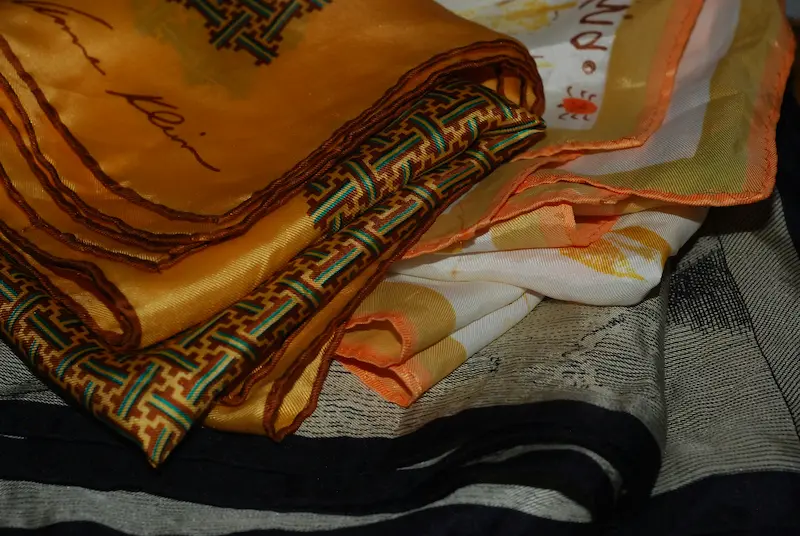
Method 4: Padded Hanger (For GM Shawls and Large-Format Only)
Hanging is acceptable only for large-format GM shawls and cashmere-silk blends where weight is distributed evenly over a padded bar. Not appropriate for 90cm Carres, where warp threads bear the full weight concentrated at the hang point over time.
Use only fabric-covered padded hangers. Never wire, metal, or unpadded wood. Metal corrodes and transfers rust marks to silk on contact.
Cover with a breathable cotton dust cover -- not plastic dry-cleaning bags.
Keep in a closed wardrobe away from all light sources.
Storage by Hermes Scarf Format: What Changes for Each Size
Hermes produces scarves in multiple formats with different weights, weaves, and dimensions. The storage method for a 90cm twill Carre is not the same as what works for a Twilly or a pleated silk:
Format | Size | Weave / Weight | Storage Recommendation |
Carre (classic square) | 90 x 90 cm | 12-momme twill | Roll on acid-free tube or flat in archival box with tissue between each fold. Never fold more than 3 times. |
Maxi Twilly | 8.5 x 120 cm | Lightweight twill | Roll loosely on a narrow tube. Slips easily into a drawer divider upright. |
Twilly (mini) | 5 x 86 cm | Lightweight twill | Roll and store upright in a small divided box or jewelry tray. Tissue not strictly required due to small format. |
Carre en soie (sheer) | 90 x 90 cm | Gauze / chiffon | Most delicate format. Flat only, with tissue every layer. No rolling -- pressure from tube can distort gauze weave. |
GM Shawl | 140 x 140 cm | Cashmere-silk blend | Padded hanger or roll on wide-diameter tube. Folding creates harder creases on cashmere-blend than on pure silk. |
Plisse / pleated silk | Various | Pleated 12-momme | Flat only, never rolled. Rolling compresses pleats permanently. Store flat with tissue maintaining pleat ridges. |
The Right Environment: Temperature, Humidity, and Light
Temperature: 60-75 degrees F (15-24 C). Stable room temperature in a climate-controlled interior room.
Humidity: 45-55% relative humidity. Below 40%, silk loses internal moisture and becomes brittle. Above 65%, mold risk increases on protein fibers.
Light: None during storage. A closed wardrobe or drawer provides sufficient protection from UV.
Airflow: Gentle circulation. Not airtight -- silk needs to breathe. Sealed plastic containers and vacuum bags accelerate degradation.
Monitoring humidity cheaply: A digital hygrometer costs $10-20 and clips inside a wardrobe. If humidity exceeds 65%, one silica gel packet placed in the storage box is sufficient. Do not use multiple packets or leave them indefinitely -- over-drying silk is as damaging as over-humidifying it.
How to Store Hermes Scarves When Traveling
Option 1: Cotton or Linen Scarf Pochette
The most practical travel solution. A flat fabric pouch sized for a folded Carre protects against contact with other items and provides breathability. Linen and cotton are both appropriate -- avoid satin or synthetic fabric pouches, which can snag on twill.
Option 2: Roll with Tissue Inside a Hard-Sided Case
For longer trips, roll the scarf loosely with a sheet of tissue and slide it inside a hard-sided sunglass case or slim accessory tube. The rigid exterior prevents compression from surrounding luggage.
At your destination: If the scarf has light travel creases, hang it in the bathroom while you shower. Steam from the shower gently relaxes the fibers without direct moisture contact. For more stubborn creases, a portable steamer held 6 inches from the surface resolves most issues in under a minute.
❌ Never pack a Hermes scarf in a plastic bag for travel. Plastic traps the moisture silk releases naturally. On a long flight, the scarf absorbs ambient moisture then releases it into the sealed plastic, creating localized humidity that can cause permanent color tide marks. |
Products Worth Using -- and One Almost Everyone Gets Wrong
Most damage comes not from using the wrong cleaning product but from using the wrong tissue paper -- the most common and least discussed mistake in the collector community:
Product | Price | Best For | Safe on Silk? | Verdict |
$8-15 | All silk formats | Yes -- lignin-free | Essential, non-negotiable | |
pH-neutral textile tube / cardboard core | $10-20 | Rolling method | Yes | Best crease prevention tool |
$20-50 | Vintage / rare Carres | Yes -- alkaline buffered | Gold standard for long-term | |
$10-20 | Monitoring environment | N/A | Inexpensive insurance | |
Silica gel packets (use sparingly) | $5-10 | High-humidity climates only | Yes, if not overdone | Use only above 65% humidity |
$15-40 | Travel and daily rotation | Yes -- breathable | Best travel solution | |
Buffered (alkaline) tissue paper | Similar price | Do NOT use for silk | No -- pH too high for silk | ❌ Avoid: damages silk protein over time |
6 Storage Mistakes That Cause Permanent Damage
Mistake | What It Does to Your Scarf | The Fix |
Folding along the same crease lines every time | Silk fibers develop memory along repeated fold lines. Over months, these become permanent fractures in the weave that steaming cannot fully recover. | Refold along different lines every 3-6 months. Rolling eliminates this risk entirely. |
Using regular gift-wrap tissue paper | Commercial tissue paper is acidic and lignin-rich. Over months it transfers acidity to silk, causing brown spotting (foxing) and brittle fibers. | Replace with unbuffered, acid-free, lignin-free tissue. Buffered (alkaline) tissue is also wrong for silk -- use unbuffered only. |
Storing in the original orange box without a tissue liner | The orange box itself is not archival-grade. Direct contact with the cardboard can transfer acids to the silk over years. | Line the box with acid-free tissue before placing the scarf inside. |
Using cedar chests or cedar blocks near silk | Cedar volatile oils can permanently stain silk and react with Hermes vegetable dyes, causing irreversible color shifting. | Use silica gel for humidity control instead. Never cedar near silk. |
Storing a scarf that was just worn without airing first | Body heat and residual skin oils trapped in a sealed box accelerate oxidation. Perfume residue bonds chemically to silk fibers over time and yellows. | Air out for 1-2 hours before folding and storing. Dry clean if the scarf was in direct skin contact for extended wear. |
Hanging a 90cm Carre on a wire or unpadded hanger | Wire hangers create rust marks on contact points. Any hanger applies gravitational strain that permanently stretches warp threads over time. | Padded hangers acceptable for GM shawls only. 90cm Carres should always be stored flat or rolled. |
Frequently Asked Questions
How do I remove creases from a Hermes silk scarf?
For light creases: lay the scarf flat overnight. Most wear creases release on their own. For persistent creases: use a garment steamer on the lowest setting, held 6 inches from the surface. Never apply the steamer head directly to the silk. For severe or long-set creases: a professional cleaner who specializes in Hermes silk is the safest option.
Can I store multiple Hermes scarves together in one box?
Yes, with limits. Maximum three scarves per archival box. Place unbuffered acid-free tissue between each scarf. Beyond three, combined weight compresses lower scarves despite the tissue cushioning.
Should I keep the original Hermes orange box?
Keep the box -- it maintains resale value. For long-term storage of months or years, line the interior with unbuffered acid-free tissue before placing the scarf inside. The orange box is not made from archival-grade pH-neutral board, so direct contact over extended periods can transfer acids to the fiber.
Is it safe to use silica gel packets in a scarf storage box?
Only in high-humidity environments above 65% relative humidity. In a climate-controlled home at 45-55% humidity, silica gel is unnecessary and can over-dry the silk. Use a digital hygrometer to monitor before adding any desiccant.
How often should I refold or re-roll stored scarves?
Every 6 months for scarves in flat storage. Refolding along different lines prevents permanent fiber memory at the same crease points. Rolled scarves do not need rerolling on the same schedule but should be inspected every 6 months.
Should I remove the Hermes tag before storing?
If attached with a plastic barb, yes -- remove before long-term storage. Plastic barbs degrade over time and can leave a sticky residue or pressure indentation on the twill weave. If attached with a thread loop, it can remain.
Can I store a worn Hermes scarf without cleaning it first?
For scarves worn loosely over clothing, airing for 1-2 hours before storage is usually sufficient. For scarves worn directly against skin, dry cleaning before storage is strongly recommended. Residual body oils and perfume left on the fiber will oxidize in storage, eventually causing permanent yellowing.
Final Thoughts
Four things protect a Hermes silk scarf in storage: never fold along the same crease lines twice, use only unbuffered acid-free tissue (not the buffered kind sold for paper archives), keep humidity between 45-55%, and store away from light. Everything else follows from those four principles.
For a single Carre in regular rotation, rolling on a pH-neutral tube takes less than two minutes and eliminates crease risk entirely. For a vintage or rarely-worn piece, an archival flat box lined with tissue provides museum-adjacent protection at modest cost.
Now it's your turn -- check your current storage setup today, replace any standard tissue paper with unbuffered acid-free tissue, and refold any scarves that have been sitting in the same position for more than three months. Your Hermes Carre will thank you for it.
Editorial Notice: This article is for informational and educational purposes only. Silk care results may vary depending on scarf age, condition, and specific dye composition. For vintage or high-value pieces, professional textile conservation is always recommended. This article may contain affiliate links.